Streakwise — A Habit Tracker That Survives a Missed Day
A cross-platform habit-tracking concept designed around recovery, not guilt, shipped from one React Native codebase.

Concept project. Streakwise is a self-directed build. We made it to show how we scope and ship a cross-platform consumer app from a single codebase. There's no client behind it; the targets and outcomes below are explicitly projected and labelled as such.
The challenge
Habit trackers have a structural flaw: the streak. A long streak is motivating right up until you break it — then the number resets to zero, the app makes you feel like a failure, and you stop opening it. The very mechanic that drives early engagement is the one that causes churn around week three.
The challenge we set Streakwise was to keep the motivating feeling of momentum while removing the cliff edge. Could we design a habit app where a missed day is a recoverable event, not a reset to zero — and could we deliver it on both platforms on a budget that suits an early-stage founder?
Our approach & process
We treated this exactly as we'd treat a real cross-platform engagement, where the central early decision is "is one codebase the right call?"
- Platform decision first. A habit tracker is mostly local CRUD, light animation, and notifications — no heavy hardware or graphics needs. That profile is the textbook case for cross-platform, so React Native with Expo was the responsible, budget-respecting choice. We documented the reasoning rather than defaulting to it.
- Reframe the core mechanic. In discovery we replaced "streak" with "consistency" — a rolling percentage of days completed over a window. This single reframing is the whole product, so we prototyped it before anything else and made sure it felt motivating, not clinical.
- Design the failure state on purpose. Most teams design the happy path and let the failure path fall out by accident. We did the opposite: the "you missed yesterday" screen got first-class design attention, because that's the moment that decides retention.
- Shared logic, platform-aware UX. We kept business logic and the SQLite data layer fully shared, while letting navigation patterns, haptics, and notification behaviour respect each platform's conventions. One codebase doesn't have to mean a lowest-common-denominator UI.
- Weekly device builds via EAS. Each one-week slice produced an installable build on both an iPhone and an Android device, so platform-specific issues surfaced early instead of at the end.
Design rationale
- Consistency over streaks. The headline metric is "you've done this 5 of the last 7 days," shown as a ring that fills rather than a counter that can crash to zero. It rewards the trend, which is what actually builds a habit.
- The recovery moment is the product. Miss a day and the app says, in effect, "yesterday slipped — today's the one that counts," with a single prominent action to log today. No red, no broken-chain imagery. We believe this screen is the difference between a 2-week app and a 12-week app.
- One-thumb home screen. Habits are big, tappable targets sized for logging while half-distracted. Cold-start to a logged habit is under five seconds because that interaction happens at the least convenient moments of someone's day.
- Reanimated for feel, not flash. The ring fill and completion feedback use native-thread animation so it feels responsive on mid-range Android hardware, not just flagship iPhones. Cross-platform credibility lives in the low-end device experience.
- Quiet by default. A single, schedulable daily reminder — no notification spam. Trust is the scarce resource for a health app.
Projected outcomes
These are illustrative projections for a concept, not metrics from a launched product.
- iOS + Android from one codebase — this is a fact of the architecture, not a projection: shared TypeScript logic and a single SQLite layer with platform-aware presentation.
- ≈40% four-week retention (projected) — an ambitious-but-plausible target for a habit app, predicated specifically on the recovery mechanic outperforming streak-reset churn. It's a hypothesis to test, not a promise.
- Under 5s cold-start to logged habit — a performance budget we'd hold the build to, measured on a representative mid-range Android device, not just a simulator.
What we'd validate next
- Does recovery actually beat streaks? The honest test is an A/B of the consistency model against a classic streak in a real cohort, measuring week-four retention. Our thesis is strong, but it's a thesis.
- Notification timing. One reminder is the safe default; we'd test whether smart, behaviour-based timing lifts completion without tipping into annoyance.
- Social accountability — carefully. Shared habits with a friend could boost retention or could add pressure that drives people away. We'd prototype a minimal version and watch both engagement and opt-out rates before investing.
- Cross-platform performance ceiling. If a future version wanted rich charts or widgets, we'd re-profile on low-end Android and decide honestly whether any screen warrants a native module.
We'd rather show a client this list than pretend a concept has been proven in the wild. For a new agency, that candour is the credential.
Design showcase
Concept screens illustrating the core flows and design direction.
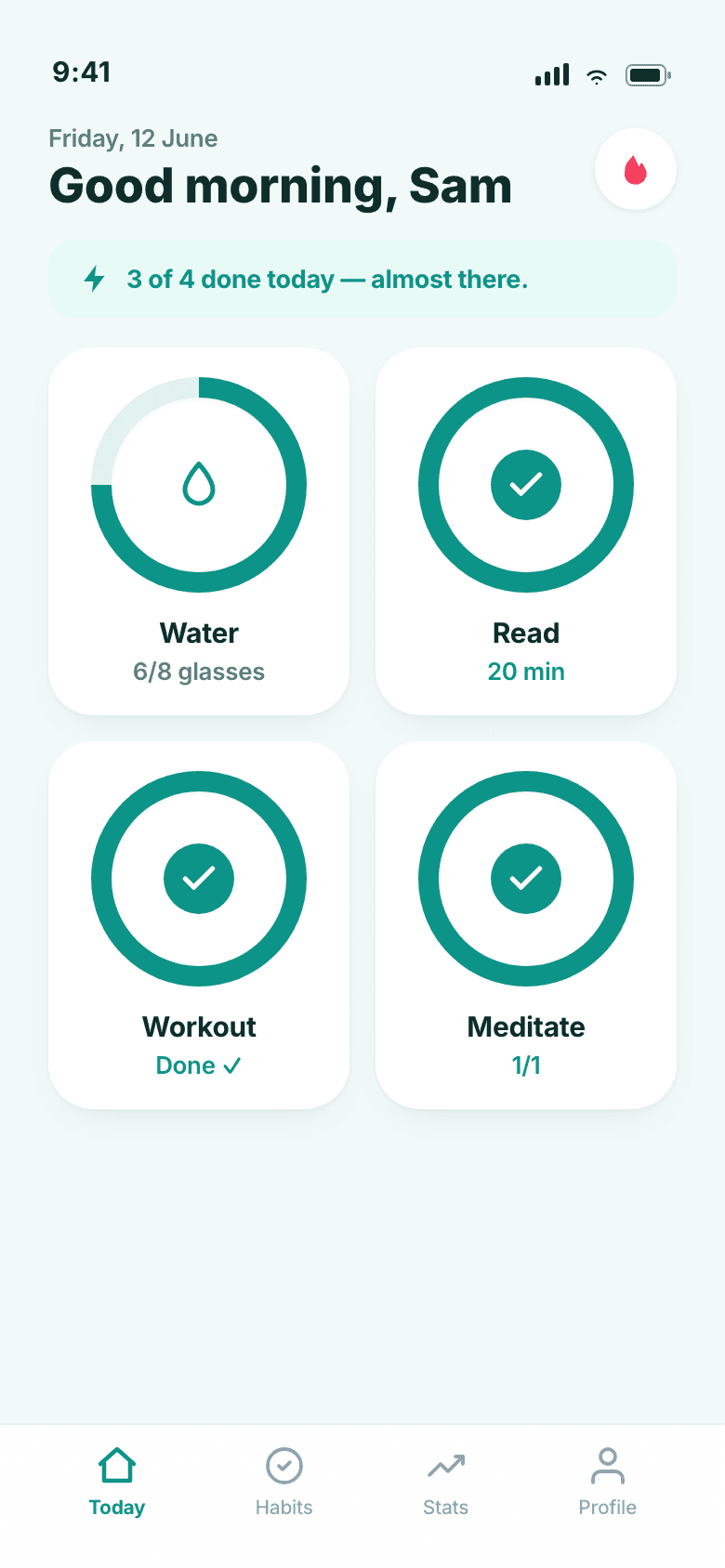
Home screen showing today's habits as large tappable rings
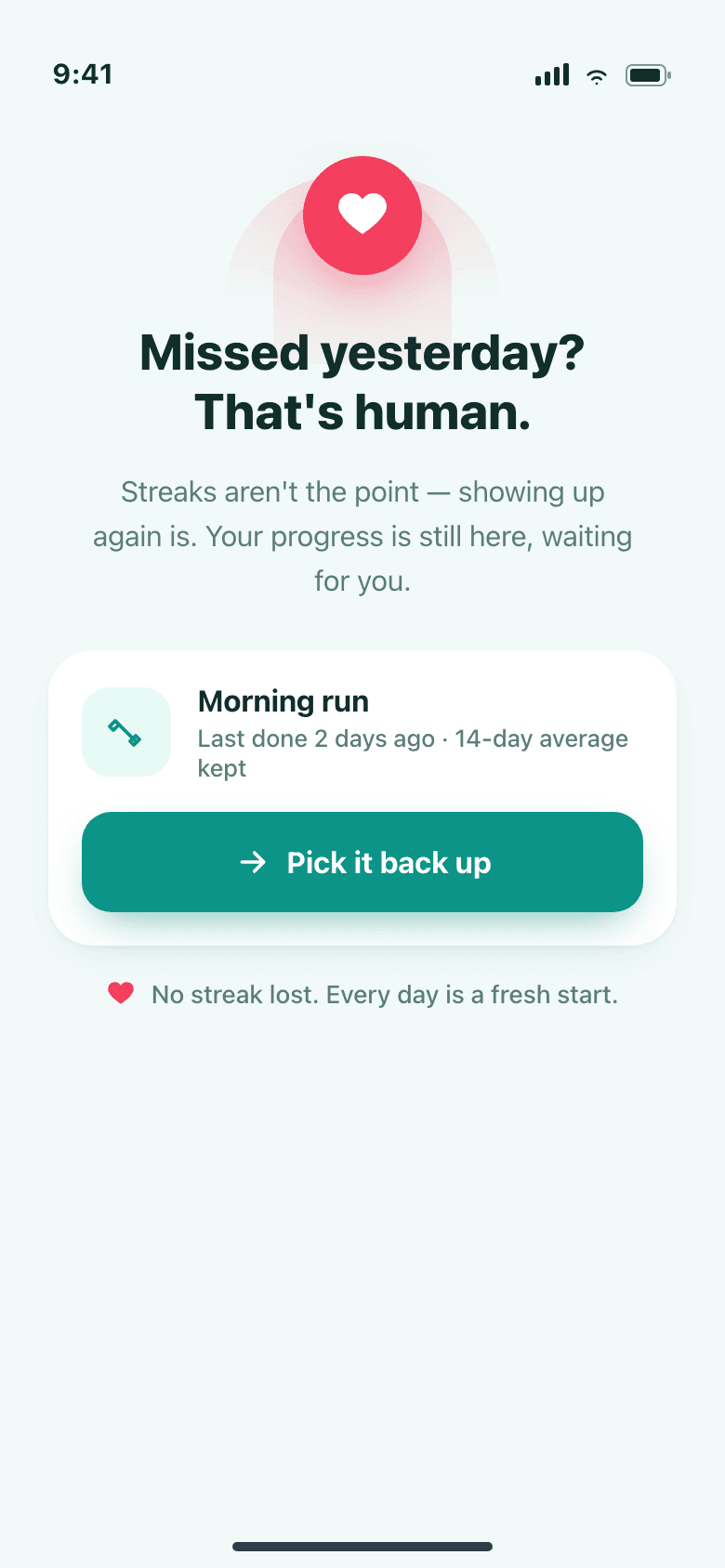
Recovery state encouraging the user to restart after a missed day
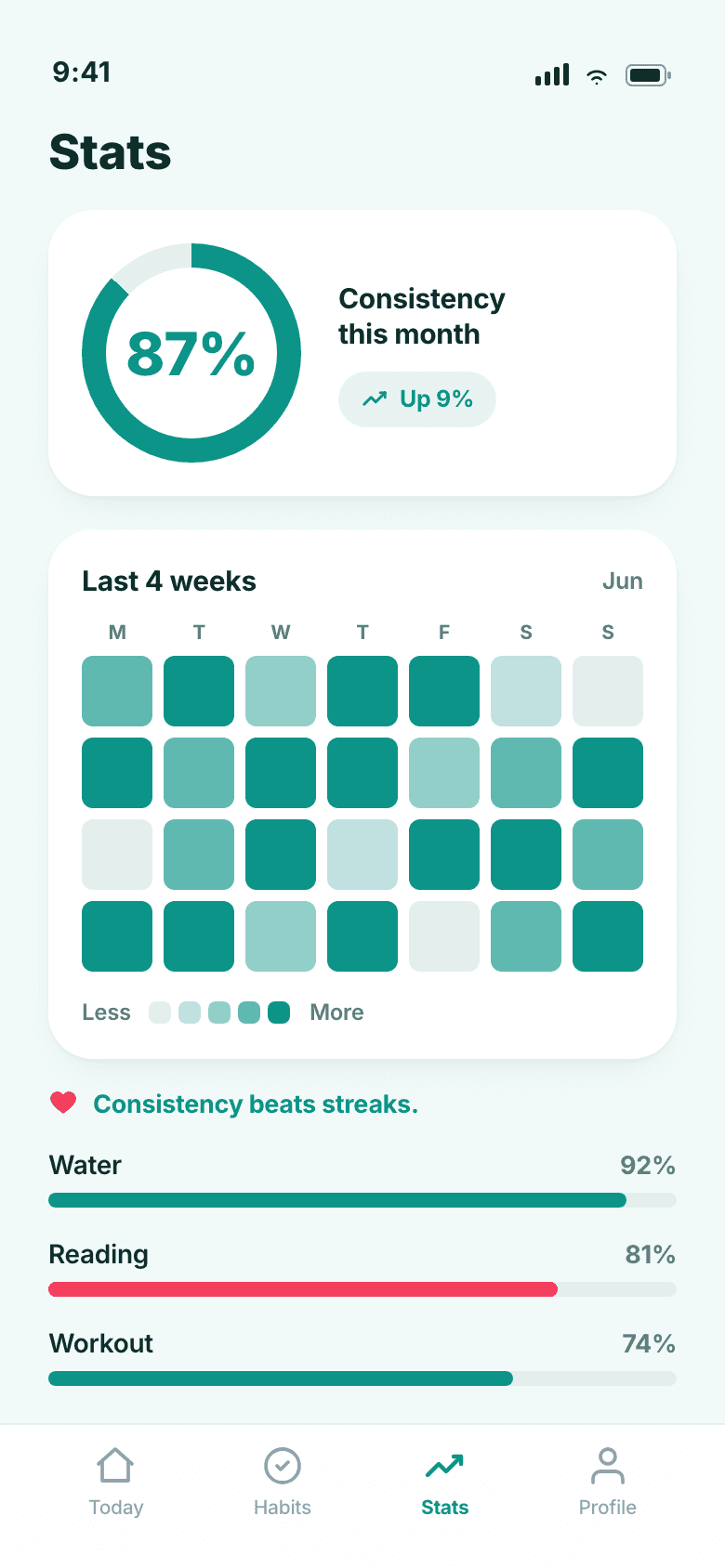
Consistency view showing percentage completed rather than a fragile streak
By the numbers
These figures are illustrative targets for the concept, not measured results from a live release.
- Codebase platforms covered
- iOS + Android (1 codebase)
- Target 4-week retention
- ≈40% (projected)
- Cold-start to logged habit
- < 5s
More work
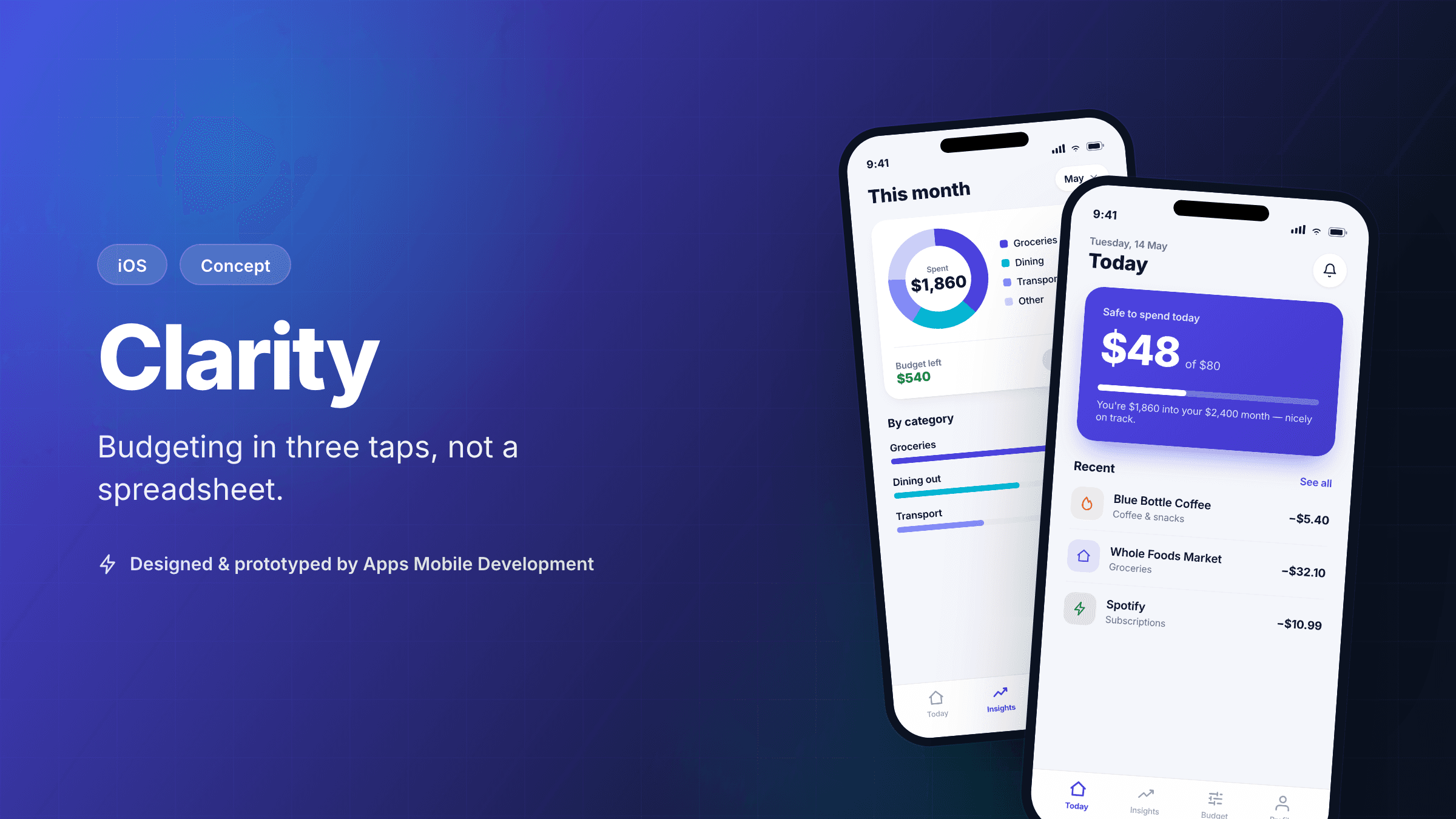 ConceptiOS
Clarity — A Calm Personal Budgeting App
A self-directed iOS concept that makes day-to-day budgeting take three taps, not a spreadsheet.
View case study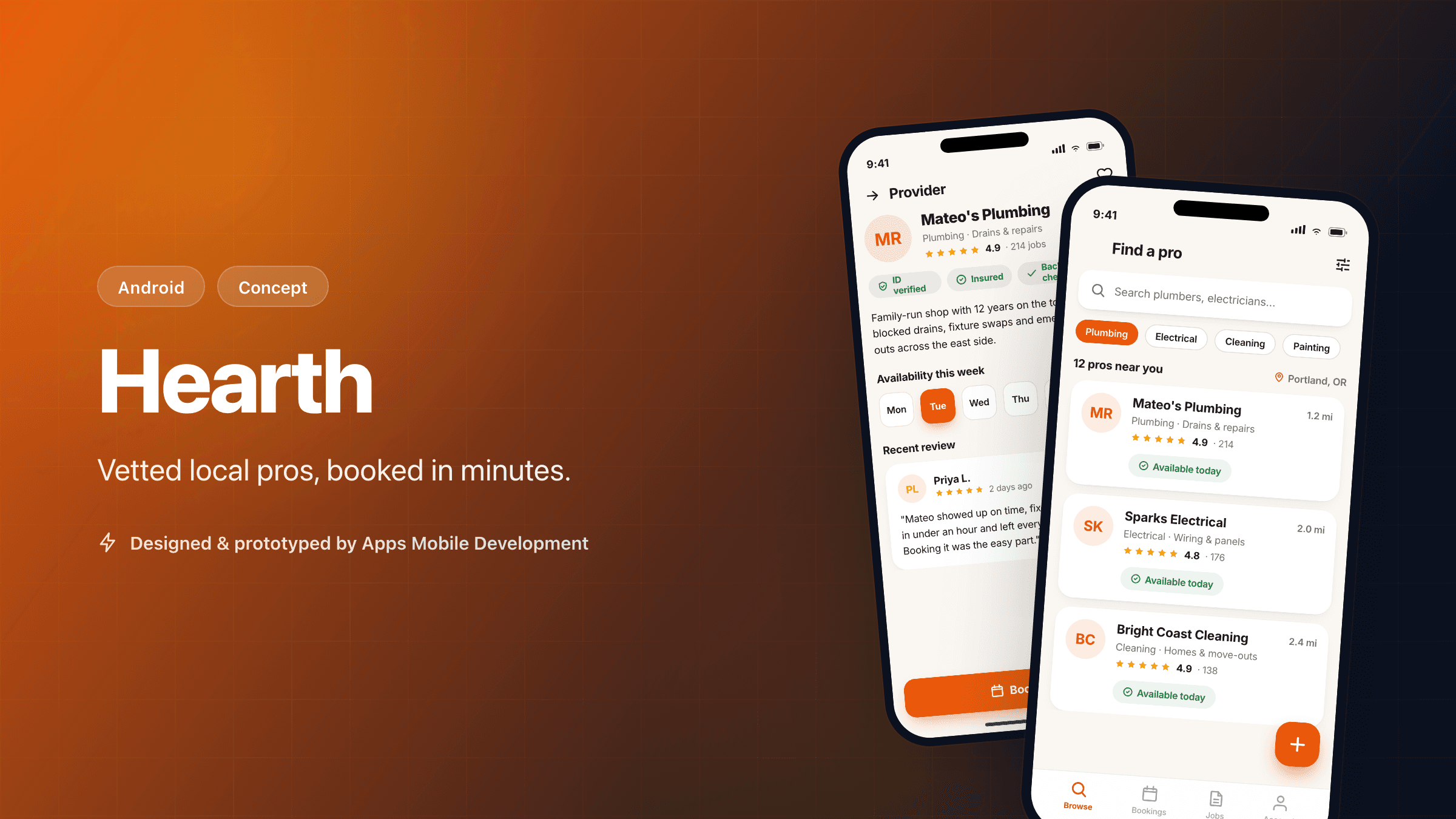 ConceptAndroid
Hearth — A Trustworthy Local Home-Services Marketplace
An Android-first concept connecting homeowners with vetted local tradespeople, built in Kotlin around trust and fast booking.
View case study
Interested in a similar app?
Tell us about your idea. We'll give you an honest, no-pressure read on what it would take to build it.